
Rusk County Criminal Court Cases
Rusk County criminal court cases divide by offense level. The 4th Judicial District Court hears felonies, and the Rusk County District Clerk keeps those files at the courthouse criminal counter in Suite 301. The Rusk County Court at Law hears Class A and B misdemeanors, with the County Clerk serving as record custodian. A felony file does not move to the County Clerk because the accused person spent time in Rusk County Jail. The filed court and cause number control where the prosecution record lives.
Class C and other fine-only matters stay outside those two main Rusk County clerk collections. Henderson, Kilgore, and Overton municipal matters remain with the proper city court, while five Rusk County justice courts retain their precinct dockets. The arresting agency is not always the filing court. Start with the charge degree, offense location, and any cause number. Those details keep a Rusk County case search from stopping at the wrong counter.
Rusk County Court Counter Split
Suite 301 is the practical first stop for a felony. The District Clerk can search a name after payment, then return available documentation by email, fax, or mail. The County Clerk, reached at 903-657-0330, is the correct custodian for County Court at Law misdemeanor files. The two offices serve different courts even though both work within the Rusk County courthouse system.
The Rusk County Court at Law page adds four useful public views: criminal trial dockets, arraignment dockets, short-list and bench-trial dockets, and a daily calendar. The official Rusk County page shows how current settings are exposed to the public.
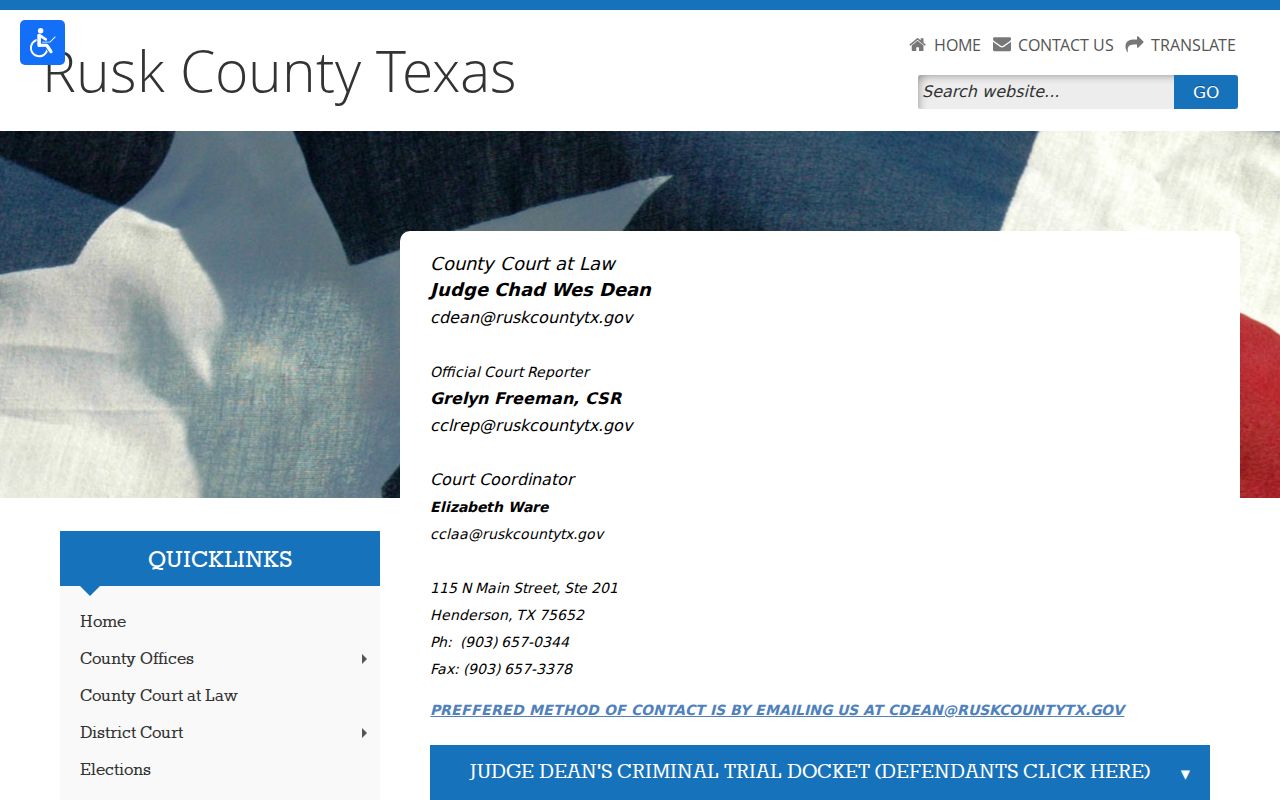
These panels help confirm a scheduled event, but they are not certified proof of how a Rusk County criminal case ended.
Searching Rusk County Case Records
Rusk County offers several access routes rather than one complete free database. The Rusk County District Clerk links to iDocket, an internet index that requires registration and a subscription. The clerk also performs an assisted $5-per-name search after payment. Copies cost more. Cash, money order, credit or debit card, and business checks are accepted, but personal checks are not. Statewide re:SearchTX can locate records submitted by participating clerks, so its coverage and document access may differ from the local index.
- Identify the likely court from the offense level. Use the District Clerk for felonies, the County Clerk for Class A or B misdemeanors, and the issuing municipal or justice court for fine-only cases.
- Enter iDocket from the official District Clerk page, or try re:SearchTX. Search with the exact legal name or cause number.
- Compare the court, filing date, charge, and any lawfully shown age information. A name match alone does not prove identity.
- Read docket events as a timeline. A setting, filing, or index entry does not by itself state the final result.
- Ask the correct clerk for the charging instrument, docket sheet, and final judgment. Request a certified copy when proof of disposition matters.
| Field Label | Type | Required | Notes |
|---|---|---|---|
| Search term | Text | Portal dependent | re:SearchTX supports party or case searching; participation varies. |
| Legal name | Text | Name route | Use exact spelling and confirm against more than the name. |
| Cause number | Text | Identifier route | The strongest route when it is known. |
| Court and filing date | Record fields | No | Use these to distinguish similar names. |
| iDocket account | Registration | Yes | Subscription gate for the local internet index. |
A search field narrows candidates, but only the clerk's filed record can authenticate the Rusk County case and its disposition.
Rusk iDocket Index Limits
An iDocket hit is a lead, not a complete Rusk County criminal case file. The public side may show index data while a pleading, order, financial ledger, or older image remains unavailable online. The official Rusk County record stays with the clerk. If the index has no document image, provide the cause number and exact document name to the District Clerk and ask whether inspection, an ordinary copy, or a certified copy is available.
The statewide portal also has limits. re:SearchTX aggregates participating courts, and access differs by clerk and document. A negative result there does not clear the Rusk County iDocket index, the County Clerk, or a municipal and justice court. Use the local custodian as the confirmation channel. For comparison, the Texas DPS criminal-history FAQ explains that the state's public name product concerns reported convictions and deferred adjudications, not the full local court file.
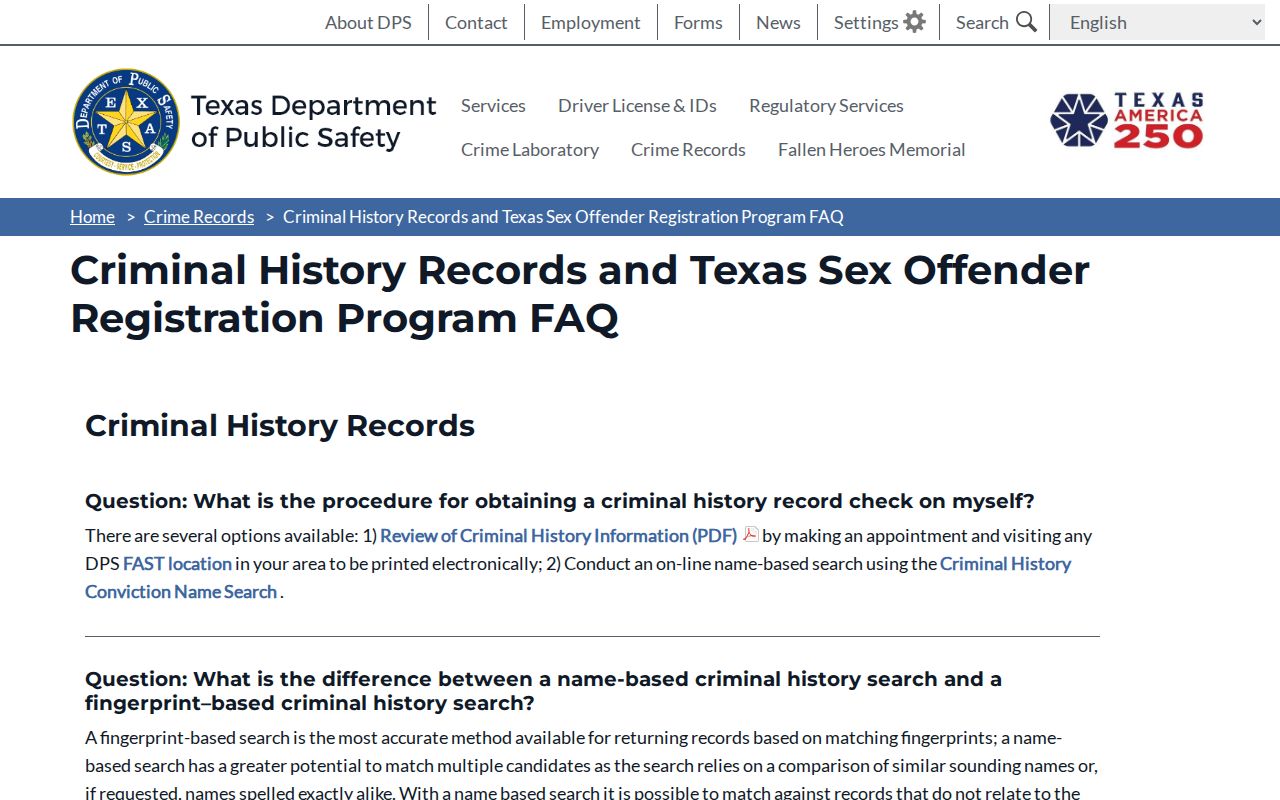
The difference matters when a searcher needs the actual indictment, motion history, or signed judgment from Rusk County.
Note: The $5 clerk charge covers a name search; copies and certification may add costs that should be confirmed before ordering.
Inside a Rusk County Case File
A Rusk County criminal case file records the prosecution, not just the arrest label. The complaint, information, or indictment identifies the charge brought to court. Docket entries show filings and hearings. A plea and judgment reveal the disposition, while the sentence states confinement, a fine, or community supervision when imposed. Reading those parts together prevents a preliminary arrest charge from being mistaken for the offense the court resolved.
| Cause Number and Court | Identifies the prosecution and the Rusk County court that owns the file. |
|---|---|
| Charging Document | Shows the statute, offense degree, and charge filed by information or indictment. |
| Docket Entries | Lists pleadings, motions, notices, settings, and court actions in date order. |
| Hearing Dates | Records arraignment, pretrial, plea, trial, and sentencing settings. |
| Disposition and Judgment | States dismissal, acquittal, conviction, or deferred adjudication as entered by the court. |
| Sentence and Conditions | Shows jail or prison time, fine, costs, and community supervision ordered in the judgment. |
The docket sheet gives the broad timeline. The charging paper and signed judgment answer the two key questions: what was prosecuted and how it ended.
Reading Rusk County Case Shorthand
Local docket and court-action records may shorten offense grades. FS or SJF means state-jail felony. F3, F2, and F1 mark the three ordinary felony degrees. MA, MB, and MC identify misdemeanor classes. These labels describe the grade shown in that record. They do not disclose an enhancement, the final punishment, or whether a record may qualify for expunction or nondisclosure.
- Arrest charge
- The alleged offense used at booking. It can differ from the filed charge.
- Indictment or information
- The charging paper that states what the prosecution brought to court.
- Deferred adjudication
- A distinct Texas disposition that is not an ordinary conviction, though it can remain public unless protected.
- Disposed
- A case reached a procedural outcome. The word alone does not mean conviction.
The Texas Penal Code classification chapter supplies the baseline ranges used with these grades.
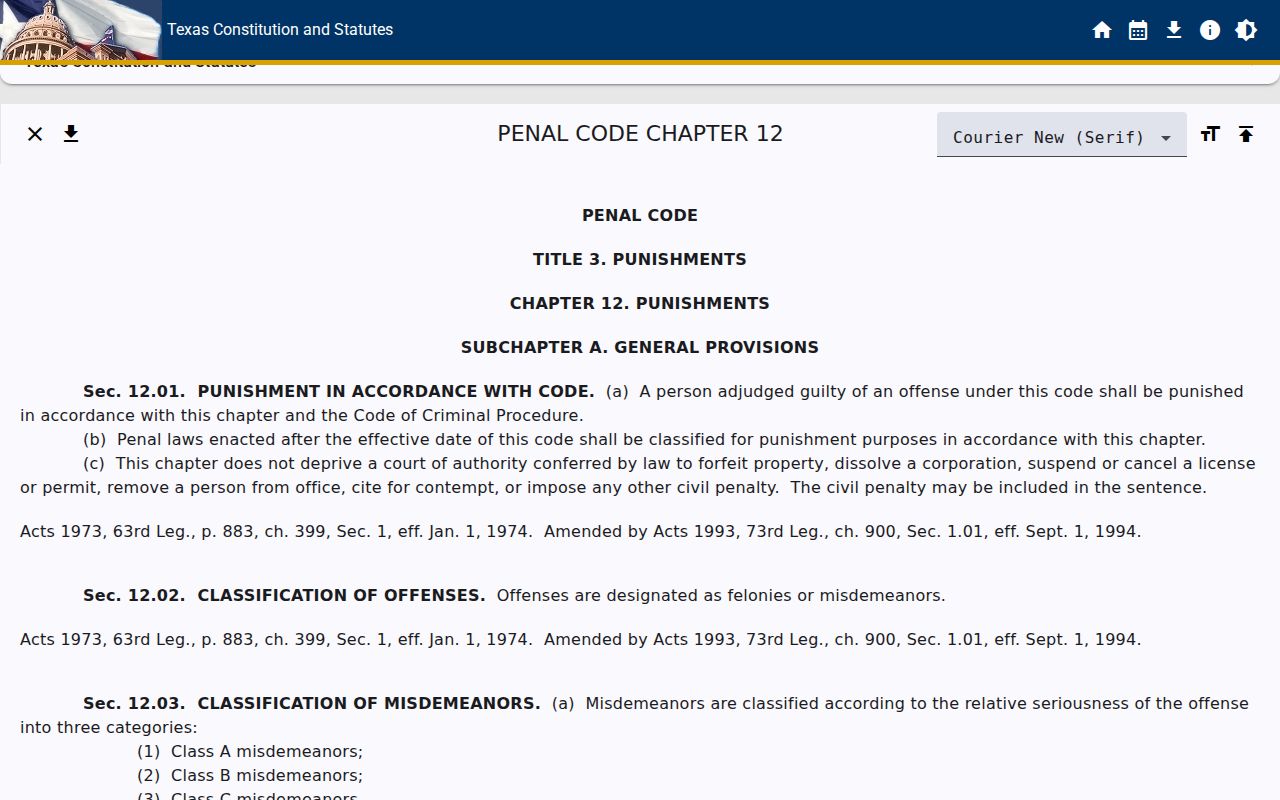
Always read the charging instrument and final judgment before drawing a conclusion from shorthand in a Rusk County case.
How a Criminal Case Moves
A prosecutor first selects the charge that will be filed. The clerk opens the Rusk County court file, and arraignment records the initial plea and later settings. Pretrial work can add motions, notices, discovery events, and negotiated plea settings. A plea or trial produces a disposition. Sentencing follows a guilty result or deferred-adjudication order. Each stage can leave a dated docket entry, but the signed order controls when a calendar and judgment differ.
Case flow: Charges Filed › Arraignment › Pretrial › Plea or Trial › Disposition › Sentencing
Rusk County local rules place County Court at Law criminal settings on a set schedule. A defendant may also request a setting in writing through the County Clerk, with proper notice and coordination. The daily calendar is useful for the next event. It cannot replace a final disposition.
Rusk Judgment and Release Lag
A judgment date and a physical release time are not always the same. Rusk County court-action paperwork tells the Sheriff and Jail Division that the District Clerk holds the official disposition. It also warns that paperwork for state-jail time served can require up to two weeks through the Texas Department of Criminal Justice. That local warning explains why a completed court entry may coexist with custody while transfer or release processing continues.
Use the judgment to learn the legal result. Use the jail or state locator to check present custody. The two records answer different questions. A reader following an arrest into the prosecution can use the county’s arrest lookup routes for the booking side, then return to the clerk file for the court outcome.
The federal system is separate again. The official PACER service supplies federal docket access after registration.
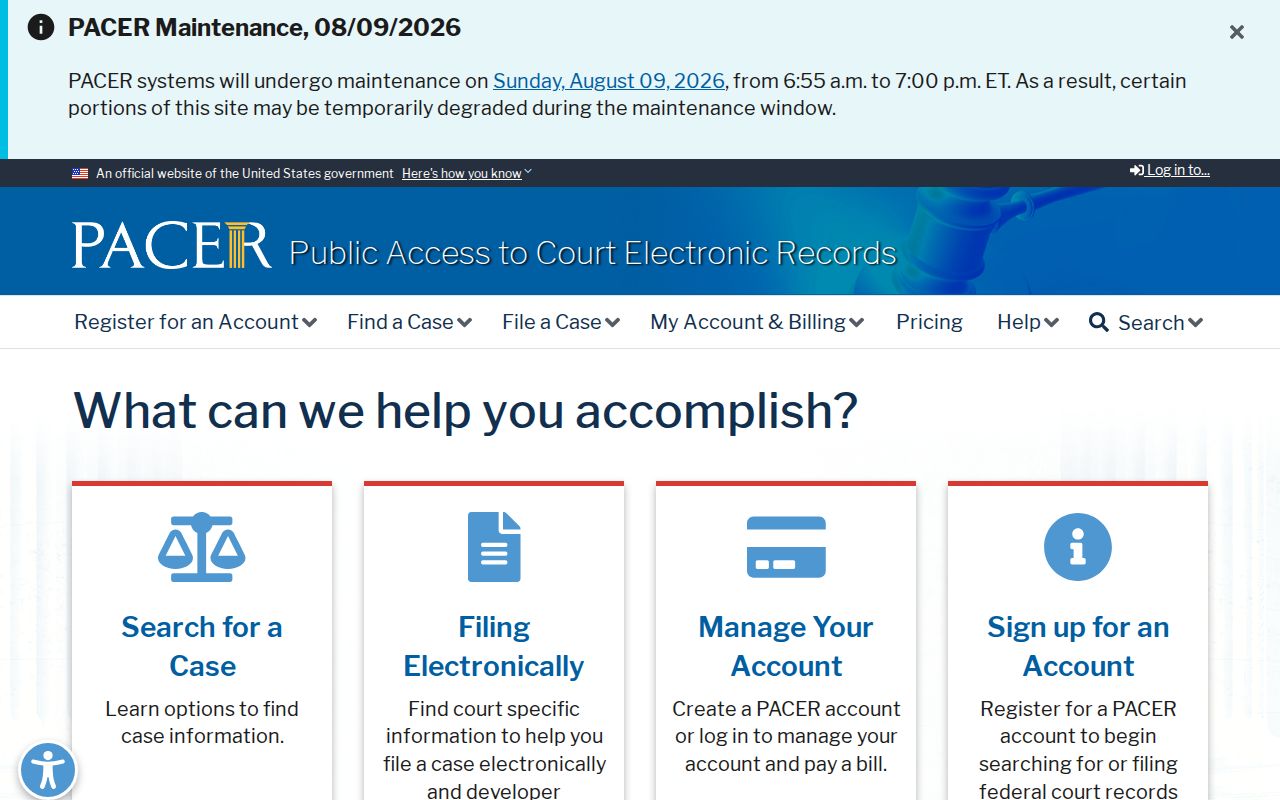
Federal criminal filings do not appear in the Rusk County iDocket collection.
Case Record Access & Restrictions
Public access does not make every fact in a Rusk County criminal case open. Juvenile justice information, victim-identifying details, medical data, and information protected by an expunction or nondisclosure order can be withheld or removed. An online view may also redact data found in the official paper file. Government Code Chapter 411 protects criminal history record information except where Texas law authorizes release.
For administrative records, the Texas Attorney General's TPIA overview explains prompt production, exceptions, and ruling procedures.
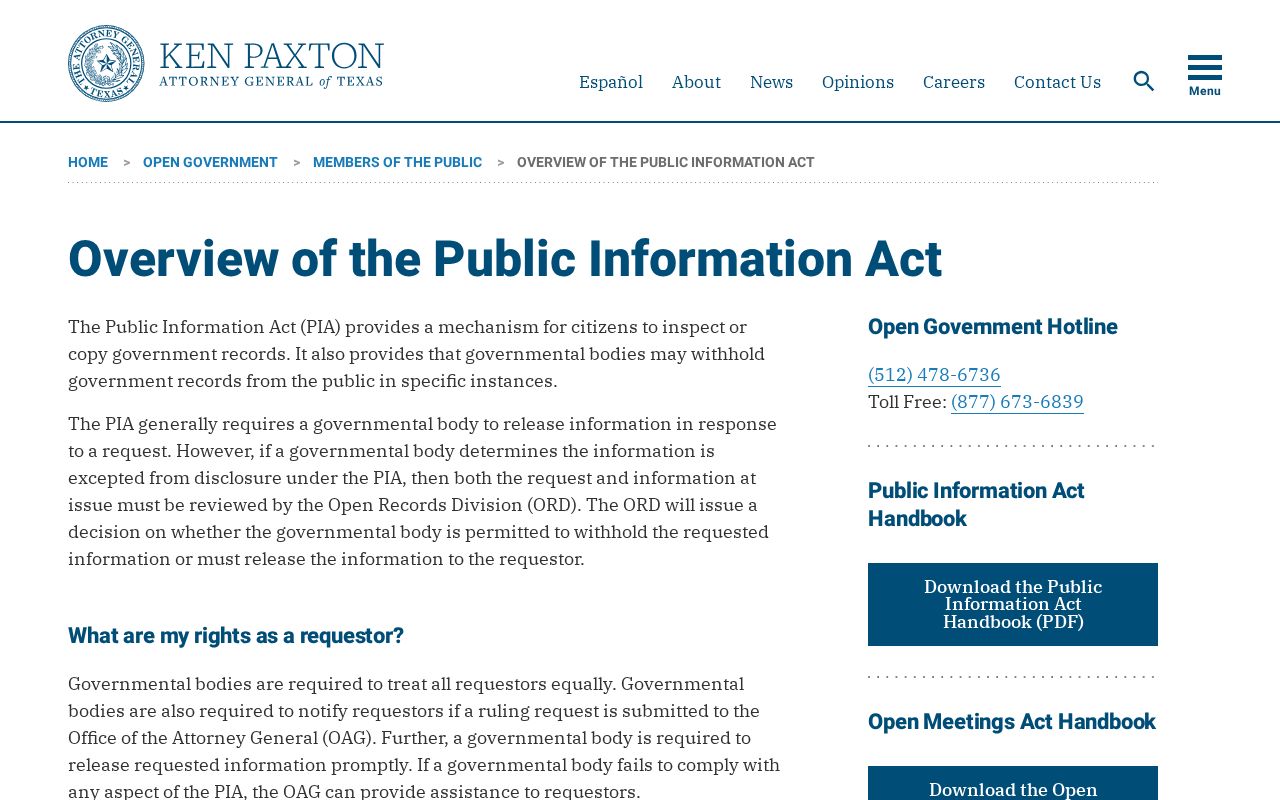
Judicial records follow court-access rules rather than the ordinary TPIA route. Ask the clerk why a Rusk County file is absent and whether an older image requires staff retrieval.
Federal Cases Beyond Rusk County
Rusk County lies in the U.S. District Court for the Eastern District of Texas. A federal prosecution will not appear merely because the conduct or arrest occurred in the county. Search PACER for the official federal docket, then use the district court site for current court information. Judiciary fees and any low-usage waiver can change, so confirm them in PACER before ordering documents.
The Eastern District of Texas website identifies the federal court serving the area.
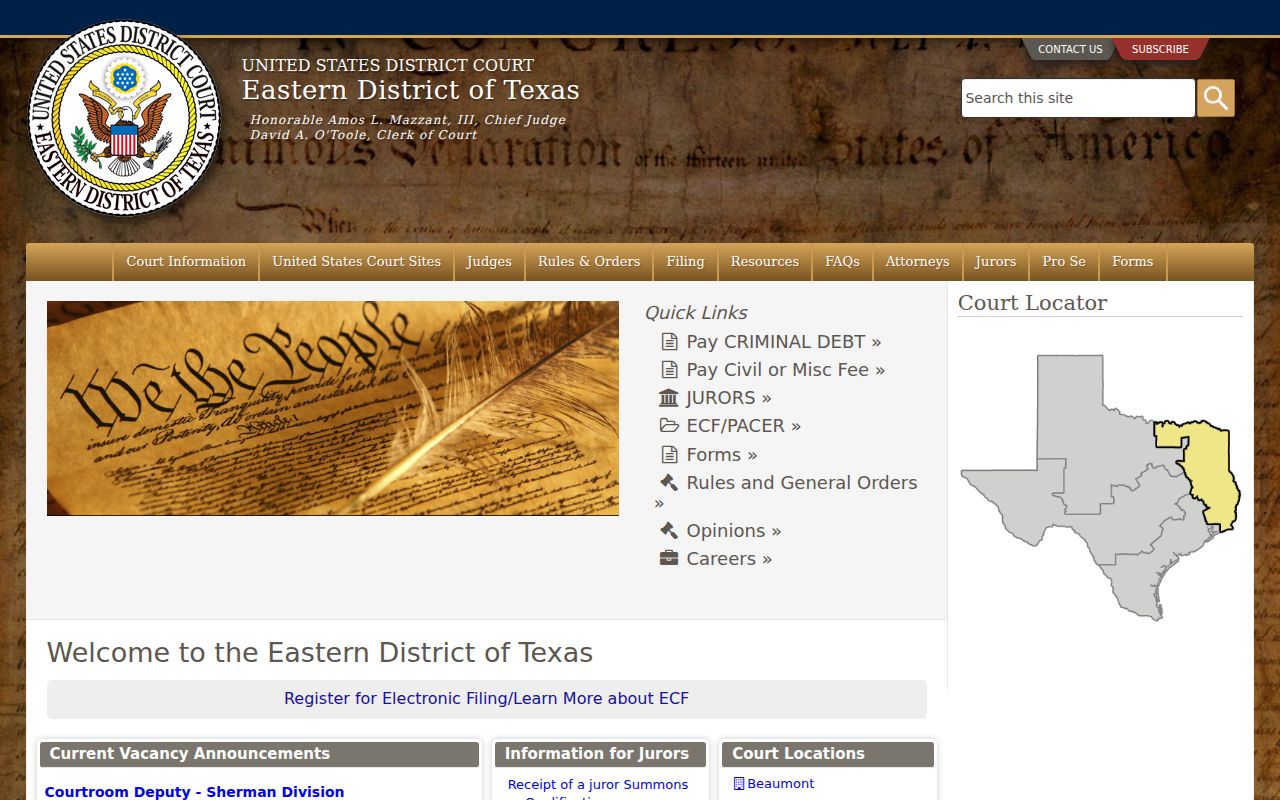
This separate layer prevents a county-only search from being treated as a complete check of all court systems.